Fluorescent Labeled RNA Services
Site-specific RNA LabelingRNase-free RNA labelingFor Imaging, qPCR, and Therapeutic R&D
Accelerate discovery and development with enterprise-grade fluorescent labeled RNA engineered for biotechnology, pharmaceutical, diagnostics, and CRO teams that demand reproducible performance. Built on controlled synthesis and post-synthetic conjugation workflows, RNase-free handling, and rigorous release testing, our solutions deliver labeled RNA with high signal-to-noise, stable fluorescence, and dependable lot-to-lot consistency. From mRNA, siRNA, miRNA, sgRNA, aptamers, and RNA oligos to custom RNA probes and dual-labeled constructs, we provide end-to-end design, labeling, purification, and documentation aligned to modern assay requirements.
Choose single-dye RNA labeling, dual-labeled RNA (reporter/quencher), or multiplex RNA probe panels optimized for your platform—cell imaging, flow cytometry, qPCR, hybridization, biosensors, target engagement, or high-throughput screening. Every labeled RNA is produced under strict contamination control and validated to protect sequence integrity, minimize background, and preserve functional performance—helping your team generate publication-quality data, reduce re-optimization cycles, and de-risk downstream decisions.
What Is Fluorescent Labeled RNA?
Fluorescent labeled RNA enables precise tracking, visualization, and quantification of RNA in biological and analytical systems. By attaching fluorophores to RNA at the 5' end, 3' end, internal positions, or via linker-functionalized bases, researchers can monitor RNA delivery and localization, measure hybridization and binding kinetics, validate assay performance, and build robust detection reagents for diagnostics. Our service focuses on controlled labeling that protects sequence fidelity, supports RNase-free workflows, and maintains the properties required for your application—whether you need bright imaging probes, qPCR-ready reporters, or mechanistic tools for RNA biology.
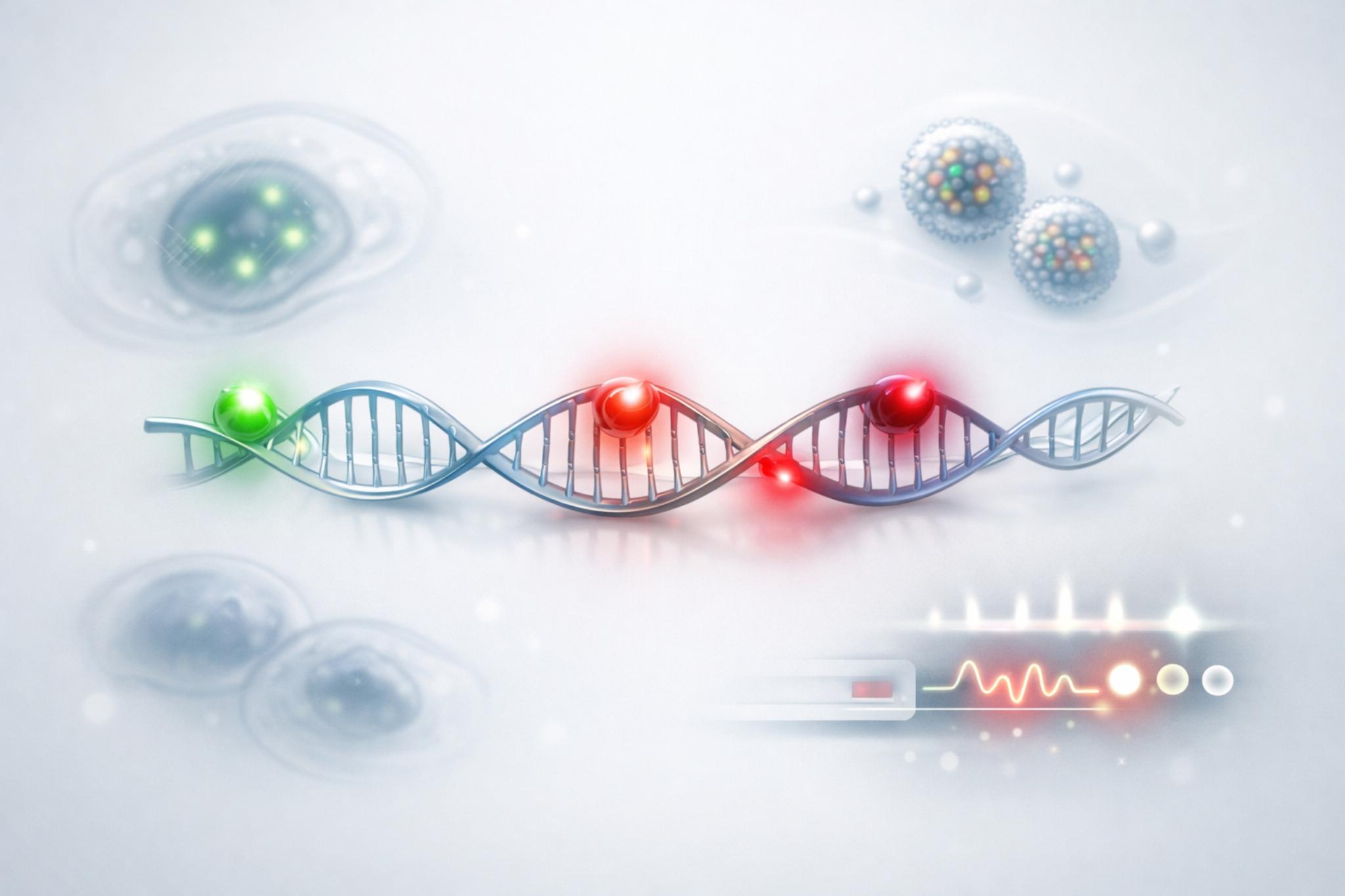 Overview of fluorescent labeled RNA showing terminal and internal labeling strategies for imaging, delivery, and diagnostic applications.
What Problems We Solve
Low Signal or Poor Brightness
We improve fluorescence output through optimized dye selection, controlled labeling density, and purification strategies that reduce quenching—delivering strong, reliable signals for RNA detection.
RNase Degradation Risk
RNase-free processing, validated handling controls, and stability-focused formulation reduce degradation and protect labeled RNA integrity during storage and experimental workflows.
High Background & Free Dye Carryover
Advanced purification (HPLC/PAGE/SEC) removes unreacted dye and short fragments, improving signal-to-noise for imaging, hybridization assays, and quantitative readouts.
Assay Interference
We design labeling sites and linkers to minimize disruption of hybridization, RNP assembly, translation, or target binding—helping preserve functional relevance in your system.
Multiplex Cross-Talk
We design multi-color RNA probe panels with spectral spacing and platform compatibility in mind, reducing bleed-through and improving accuracy for multiplex assays.
Batch-to-Batch Variability
Standardized release criteria and documented QC deliver consistent labeled RNA lots—supporting CRO studies, diagnostics development, and long-running research programs.
Our Fluorescent Labeled RNA Services
We deliver enterprise-grade fluorescent labeled RNA services designed for biotechnology, pharmaceutical, diagnostics, and life science research organizations. Our capabilities span short synthetic RNA, long RNA transcripts, and functional RNA constructs, with precise control over labeling position, fluorophore selection, purity, and biological performance. Each project is guided by experienced RNA chemists and validated through rigorous analytical workflows to ensure reproducibility, scalability, and downstream compatibility.
 Fluorescent Labeled Synthetic Oligonucleotides & RNA
High-purity fluorescent labeling of chemically synthesized RNA oligonucleotides for analytical, imaging, and hybridization-based applications.
Capabilities include:
- 5'-end, 3'-end, and internal fluorescent labeling of RNA oligos (typically 10–100 nt)
- Support for siRNA, miRNA, antisense RNA, guide RNA fragments, and aptamer sequences
- NHS ester, thiol–maleimide, and phosphoramidite-based labeling chemistries
- Single-color, dual-color, and quencher–reporter probe designs
- High-purity HPLC or PAGE purification with mass confirmation
- Optimized linker lengths to minimize fluorescence quenching and steric interference
Typical applications: hybridization assays, FISH, molecular diagnostics, RNA–protein interaction studies
 Fluorescent Labeled Long mRNA & RNA
Controlled fluorescent labeling of long RNA transcripts and mRNA while preserving structural integrity and translational or biological functionality.
Capabilities include:
- Enzymatic and transcription-based incorporation of fluorescent nucleotides
- End-labeling strategies for long RNA to minimize disruption of coding regions
- Tunable labeling density to balance signal intensity and biological performance
- Compatibility with capped, polyadenylated, and modified mRNA constructs
- Removal of free dye and truncated species via SEC or advanced purification workflows
- Analytical QC including size integrity, fluorescence profiling, and purity assessment
Typical applications: mRNA delivery studies, intracellular trafficking, expression tracking, live-cell imaging
 Functional Fluorescent RNA Probes & Reporters
Custom-designed RNA probes engineered for signal generation, switching, or reporting in quantitative and real-time assays.
Capabilities include:
- Molecular beacons and structure-switching RNA probes
- Fluorophore–quencher pair optimization for low background and high signal-to-noise
- Dual-labeled RNA for FRET and conformational studies
- Sequence and structure optimization to enhance hybridization specificity
- Spectral planning for multiplex assay development
Typical applications: qPCR/RT-qPCR, nuclease assays, RNA folding studies, diagnostics development
 Fluorescent RNA Conjugates for Delivery & Trafficking
Fluorescently labeled RNA constructs designed to support delivery optimization, uptake analysis, and intracellular fate tracking.
Capabilities include:
- RNA conjugation to peptides, lipids, polymers, or targeting ligands
- Bioorthogonal click-chemistry strategies for modular construct design
- Fluorophore positioning to avoid interference with carrier function
- Labeling compatible with lipid nanoparticles, liposomes, and polymeric carriers
- Support for comparative uptake and biodistribution studies
Typical applications: RNA delivery R&D, intracellular trafficking, endosomal escape studies, screening platforms
 Custom & Enterprise RNA Labeling Solutions
Bespoke fluorescent RNA labeling programs tailored for complex workflows, non-standard RNA formats, and scale-up requirements.
Capabilities include:
- Consultation-driven strategy design based on RNA type, application, and detection platform
- Non-standard fluorophores, NIR dyes, or customer-specified labels
- Batch-to-batch consistency programs for translational or preclinical studies
- Integrated QC documentation to support regulated or validated workflows
- Long-term collaboration support for platform development and screening campaigns
Typical applications: platform development, high-throughput screening, translational research, diagnostic assay pipelines
Fluorophores We Offer for Fluorescent Labeled RNA
Selecting the right fluorophore is critical for achieving reliable performance in fluorescent labeled RNA applications. RNA presents unique challenges—including structural sensitivity, susceptibility to degradation, and context-dependent fluorescence behavior. Our fluorophore portfolio is curated specifically for RNA labeling, with careful consideration of brightness, photostability, steric impact, and compatibility with chemical and enzymatic labeling strategies. All dyes listed below are validated for use with synthetic RNA, enzymatically produced RNA, and functional RNA constructs.
| Fluorophore Family | Excitation / Emission (nm) | RNA Compatibility | Preferred Applications | Key Advantages for RNA Labeling |
| FAM (Fluorescein) | 495 / 519 | Synthetic RNA, short oligos, probes | qPCR probes, hybridization assays, molecular beacons | Widely validated, high sensitivity for analytical assays, cost-effective for large-scale probe production |
| HEX / VIC-class dyes | 535–538 / 555–560 | Synthetic RNA, dual-labeled probes | Multiplex qPCR, comparative RNA quantification | Reduced spectral overlap with FAM; ideal for multiplex diagnostic workflows |
| TAMRA | 540 / 565 | Synthetic RNA, quencher-reporter constructs | RNA probes, fluorescence polarization, conformational studies | Strong signal stability; frequently used as reporter or reference dye in RNA assays |
| Cy3 | 550 / 570 | Synthetic RNA, enzymatically labeled RNA | RNA imaging, FISH, intracellular localization | High brightness; well-balanced size-to-signal ratio for RNA structural integrity |
| Cy5 | 649 / 670 | Synthetic RNA, long RNA, mRNA | Live-cell RNA tracking, multiplex imaging, delivery studies | Low cellular autofluorescence; excellent for multicolor RNA imaging and trafficking analysis |
| Cy7 / NIR Dyes | 740–780 / 770–820 | Long RNA, delivery-associated RNA constructs | In vivo RNA tracking, biodistribution, delivery optimization | Near-infrared emission enables deep-tissue imaging with minimal background interference |
| Alexa Fluor Series | Multiple options | Synthetic RNA, long RNA, conjugated RNA | High-resolution imaging, multicolor panels, enterprise workflows | Superior photostability and batch consistency; ideal for reproducible RNA imaging and screening |
| ATTO Dyes | 488–647 range | Synthetic RNA, precision-labeled RNA | Single-molecule RNA studies, FRET, super-resolution microscopy | Exceptional brightness and photostability for advanced biophysical RNA applications |
| BODIPY-based Dyes | 500–530 range | RNA conjugates, hydrophobic environments | RNA–carrier conjugates, delivery system studies | Compact structure minimizes steric interference; suitable for conjugated RNA constructs |
| Custom / Client-Specified Dyes | On request | Custom RNA formats | Proprietary assays, platform development, regulated pipelines | Full flexibility with NDA support; integration into existing enterprise detection platforms |
Our RNA Labeling Chemistry & Methods
Fluorescent labeling of RNA requires chemistries that preserve molecular integrity, sequence fidelity, and biological function. Unlike proteins or DNA, RNA is highly sensitive to harsh reaction conditions, metal ions, and excessive chemical modification. Our RNA labeling platform focuses exclusively on validated, RNA-compatible chemistries that are routinely used in research, diagnostics, and translational development. Each method is selected based on RNA length, structure, labeling position, fluorophore size, and downstream application requirements.
| Labeling Strategy | Chemical / Enzymatic Principle | RNA Types Supported | Typical Applications | Key Considerations |
| 5′ / 3′ End Chemical Labeling | Fluorophores are coupled to terminally modified RNA (amine- or thiol-functionalized) using mild NHS ester or maleimide chemistry under RNase-free conditions. | Synthetic RNA oligonucleotides, siRNA, miRNA, short guide RNA | Hybridization probes, RNA tracking, analytical assays | Minimal impact on RNA structure; labeling position is well defined and highly reproducible |
| Phosphoramidite-Based Labeling During Synthesis | Fluorophore-modified phosphoramidites are incorporated into RNA during solid-phase synthesis, enabling precise placement at terminal or internal positions. | Short RNA oligos (typically ≤100 nt), custom probes | Dual-labeled probes, FRET studies, molecular beacons | Highest positional accuracy; limited to synthetic RNA length constraints |
| Enzymatic End Labeling | RNA ligases or polymerases are used to attach fluorescently labeled adapters or nucleotides to RNA termini under controlled enzymatic conditions. | Long RNA transcripts, mRNA, sgRNA | RNA trafficking studies, transcript localization, functional RNA analysis | Gentle to RNA structure; suitable for long RNA where chemical synthesis is impractical |
| Fluorescent Nucleotide Incorporation | Fluorescent UTP or CTP analogs are incorporated during in vitro transcription or enzymatic extension, with controlled incorporation ratios. | mRNA, long RNA, transcription products | Live-cell imaging, transcription assays, RNA dynamics studies | Labeling density must be optimized to balance signal intensity and RNA functionality |
| Copper-Free Click Chemistry | Bioorthogonal azide–alkyne reactions (SPAAC) are used to conjugate fluorophores to pre-functionalized RNA without metal catalysts. | Synthetic RNA, modified RNA constructs, RNA conjugates | RNA–ligand conjugation, delivery studies, modular RNA design | Highly selective and RNA-safe; ideal for complex or multifunctional constructs |
| Fluorophore–Quencher RNA Designs | Site-specific installation of fluorophore and quencher moieties on the same RNA molecule to generate signal changes upon hybridization or cleavage. | Synthetic RNA probes, diagnostic oligos | qPCR, nuclease assays, molecular diagnostics | Requires careful sequence and spacing design to achieve optimal signal-to-noise ratios |
Quality Control & Data Delivered
Ensuring the integrity, purity, and functional performance of fluorescent labeled RNA is critical for downstream research, diagnostics, and translational workflows. RNA molecules are inherently sensitive to degradation, structural disruption, and over-labeling effects. Our quality control strategy is therefore designed specifically for RNA-based materials, with validation steps selected according to RNA length, labeling strategy, and intended application. Each project is delivered with a clearly documented QC package to support reproducibility, data interpretation, and enterprise-level decision making.
| QC Parameter | Methodology | Applicable RNA Types | Data Delivered |
| RNA Integrity & Size Verification | Denaturing PAGE, urea-PAGE, or capillary electrophoresis (as appropriate) | Synthetic RNA, long RNA, mRNA | Gel images or electropherograms confirming RNA integrity and expected size |
| Purity Assessment | HPLC (ion-exchange or reversed-phase) or PAGE-based purity analysis | Synthetic RNA, labeled probes, diagnostic RNA | Chromatograms with % purity and peak annotation |
| Fluorophore Incorporation Confirmation | UV–Vis absorbance analysis and fluorescence spectral scanning | All fluorescent labeled RNA formats | Absorbance ratios, excitation/emission spectra, fluorophore presence verification |
| Labeling Density / Dye-to-RNA Ratio | Spectrophotometric calculation based on RNA and dye-specific extinction coefficients | End-labeled RNA, internally labeled RNA, mRNA | Calculated labeling ratio (when applicable) with interpretation notes |
| Removal of Free Dye | SEC, desalting columns, ultrafiltration, or preparative HPLC | All chemically or enzymatically labeled RNA | Confirmation of free-dye removal based on chromatographic or spectral data |
| Sequence / Identity Verification | Mass spectrometry (for synthetic RNA) or sequence documentation review | Synthetic RNA, short labeled oligonucleotides | Mass confirmation report or identity statement |
| Functional Performance (Optional) | Application-specific validation such as hybridization testing, enzymatic reaction compatibility, or fluorescence response assessment | Probes, molecular beacons, functional RNA constructs | Functional readout summary or representative performance data |
| Stability & Handling Assessment | Short-term storage evaluation and freeze–thaw tolerance review | All delivered RNA formats | Storage recommendations and handling guidelines |
General Workflow for Fluorescent Labeled RNA


Project Evaluation & Strategy Design
We assess RNA type (synthetic RNA, siRNA, mRNA, long RNA), length, sequence features, and downstream application. An appropriate labeling strategy, fluorophore class, and labeling position are defined to balance signal strength and RNA functionality.

RNA Preparation & Pre-Processing
Incoming RNA or synthesized material is handled under RNase-free conditions. Buffer composition, concentration, and compatibility with labeling chemistry are verified or optimized prior to conjugation.

Fluorescent Labeling Reaction
Labeling is performed using RNA-compatible chemical or enzymatic methods under controlled conditions. Reaction parameters are adjusted to avoid RNA degradation, over-labeling, or loss of biological performance.

Purification & Free Dye Removal
Excess fluorophore and reaction by-products are removed using chromatography, desalting, or ultrafiltration, ensuring high-purity fluorescent labeled RNA suitable for sensitive assays.

Quality Control & Data Verification
Each batch undergoes RNA integrity assessment, purity analysis, fluorophore verification, and labeling efficiency evaluation according to project requirements.

Final Delivery & Technical Support
Labeled RNA is delivered with a complete QC summary, storage recommendations, and application guidance. Ongoing technical support is available to ensure successful downstream use.
Advantages of Our Fluorescent Labeled RNA Services
RNA Integrity–First Strategy
RNA labeling workflows are designed to minimize degradation, structural disruption, and loss of biological performance, ensuring reliable results for sensitive downstream applications.

Precise Control of Labeling Position & Density
Labeling position and fluorophore loading are optimized to balance signal intensity with hybridization efficiency, translation potential, or intracellular behavior.
Broad Compatibility Across RNA Formats
Our platform supports synthetic RNA, siRNA, miRNA, sgRNA, long RNA transcripts, and mRNA used in research, diagnostic, and translational workflows.
Enterprise-Grade Quality Control & Documentation
Each project is delivered with application-aligned QC data and handling guidance, supporting reproducibility, internal review, and confident decision making.
Applications of Fluorescent Labeled RNA
RNA Imaging & Localization
- Visualization of RNA distribution in fixed or live cells
- Tracking subcellular localization and intracellular transport
- Multi-color imaging of different RNA species
RNA Delivery & Trafficking Studies
- Evaluation of RNA uptake and cellular internalization
- Tracking RNA release from delivery systems
- Assessment of intracellular stability and retention
qPCR & Molecular Diagnostics
- Fluorescent RNA probes for RT-qPCR and isothermal assays
- Molecular beacon and quencher–reporter RNA designs
- Multiplex detection and quantitative analysis
RNA–Protein Interaction & Functional Studies
- Binding and interaction analysis using labeled RNA
- RNA folding, conformational, and mechanism studies
- Screening and characterization of RNA-binding proteins
What Our Research Clients Say

"The fluorescent labeled RNA was delivered with excellent integrity and clearly documented QC data. The labeling strategy preserved RNA functionality, which was critical for our intracellular trafficking studies."
— Senior Scientist, RNA Delivery Platform Team, Global Biotechnology Company
"Their technical guidance on fluorophore selection and labeling position helped us significantly reduce background and improve signal consistency across experiments. A reliable partner for RNA-focused research."
— Principal Investigator, Molecular Diagnostics R&D Group
Custom Fluorescent Labeled RNA Solutions for Your Research
Whether you are developing RNA delivery systems, building diagnostic assays, or investigating RNA function and localization, our team provides custom fluorescent labeled RNA solutions tailored to your specific research goals. From fluorophore selection and labeling strategy design to quality-controlled delivery, we work closely with your scientists to ensure reliable, reproducible outcomes.Contact us to discuss your project requirements or request a technical consultation.
Frequently Asked Questions (FAQ)
What is fluorescent labeled RNA used for?
Fluorescent labeled RNA is used to visualize, track, and quantify RNA molecules in applications such as cellular imaging, RNA delivery studies, qPCR diagnostics, RNA–protein interaction analysis, and functional RNA research.
What types of RNA can be fluorescently labeled?
Commonly labeled RNA formats include synthetic RNA oligonucleotides, siRNA, miRNA, sgRNA, long RNA transcripts, and mRNA. The labeling strategy depends on RNA length, structure, and application requirements.
Does fluorescent labeling affect RNA integrity or function?
When properly designed, fluorescent labeling can preserve RNA integrity and biological performance. Labeling position, fluorophore size, and labeling density are carefully optimized to minimize structural disruption and functional impact.
What labeling positions are available for fluorescent RNA?
Fluorescent RNA can be labeled at the 5' end, 3' end, or internal positions. End labeling is commonly used for minimal interference, while internal or dual labeling is applied for probes and FRET-based designs.
What fluorophores are commonly used for RNA labeling?
Frequently used fluorophores include FAM, HEX, TAMRA, Cy3, Cy5, near-infrared dyes, and selected Alexa Fluor or ATTO dyes, chosen based on detection platform, spectral requirements, and RNA compatibility.
What quality control data are provided with fluorescent labeled RNA?
Delivered QC data may include RNA integrity analysis, purity assessment, fluorophore confirmation, labeling ratio calculation, and handling/storage recommendations, depending on project scope.