Fluorescent Labeled Glucose
High-PurityQC-validatedMetabolic Tracing
Accelerate metabolism-focused R&D with enterprise-grade fluorescent labeled glucose solutions engineered for biotechnology, pharmaceutical, diagnostics, and CRO teams. Our fluorescent glucose probes are designed for robust glucose uptake quantification, transporter activity profiling, and metabolic flux studies—delivering strong signal integrity, low background, and dependable lot-to-lot reproducibility for demanding workflows.
From live-cell imaging and flow cytometry to high-throughput screening and mechanism-of-action studies, we provide customized fluorescent labeled glucose formats aligned to your biology, instrument configuration, and data requirements. Each product is supported by rigorous analytical validation (identity, purity, labeling confirmation, and fluorescence performance) to help your team generate confident, publication-ready, and decision-grade results.
What Is Fluorescent Labeled Glucose?
Fluorescent labeled glucose is a glucose molecule or glucose analog conjugated to a fluorophore, enabling researchers to visualize and quantify glucose uptake, transport dynamics, and metabolism in real time. Compared with radioactive tracers, fluorescent glucose probes offer a non-radioactive, instrument-friendly workflow that integrates seamlessly into fluorescence microscopy, plate readers, and flow cytometry.
These probes are widely applied to study GLUT transporter activity, insulin responsiveness, cancer metabolic rewiring, immune cell activation, and metabolic disorder biology—supporting both exploratory research and translational assay development while maintaining practical compatibility with modern detection platforms.
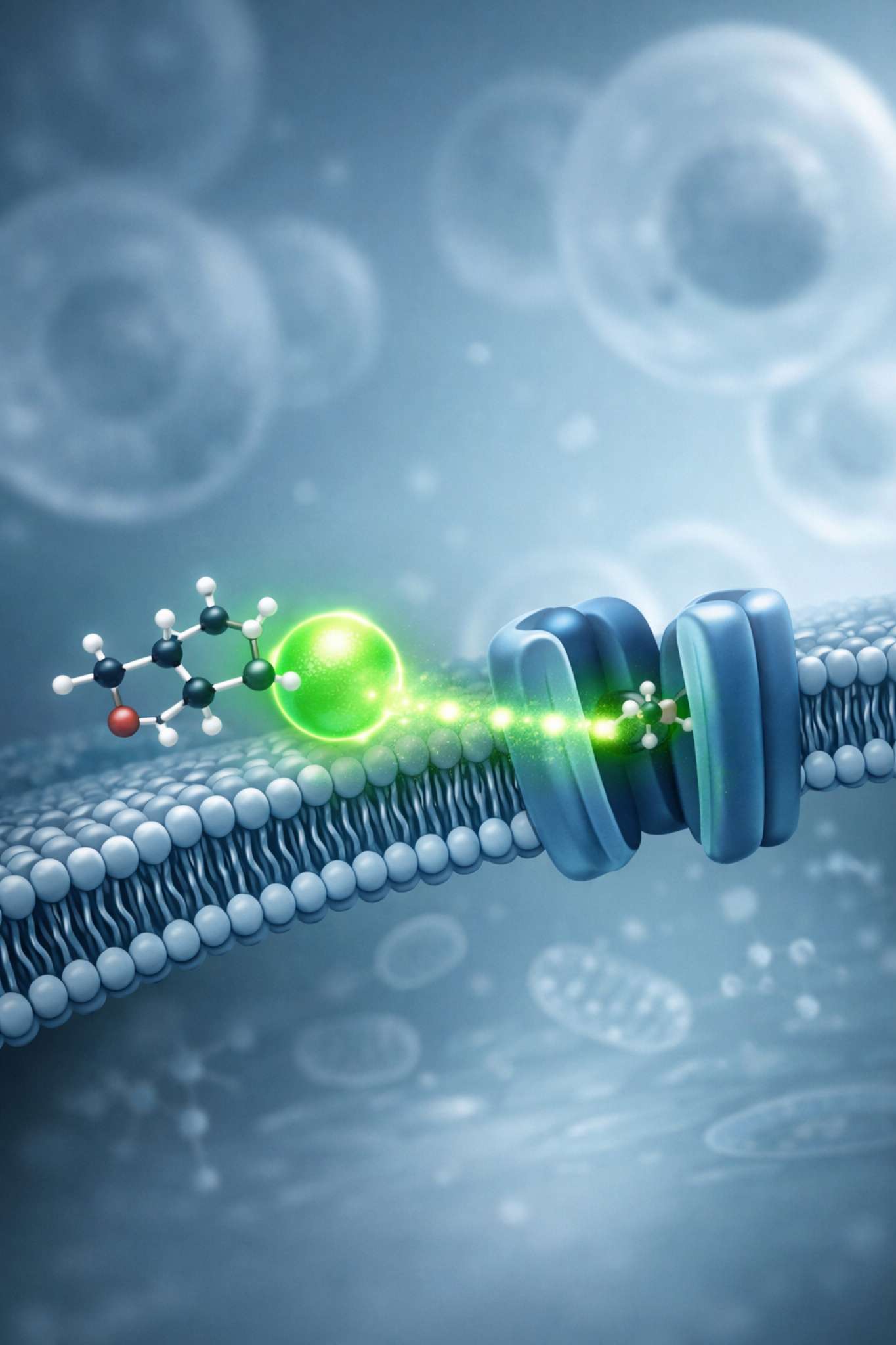 Schematic illustration of fluorescent labeled glucose uptake through glucose transporters (GLUT) across the cell membrane for cellular metabolism research.
What Problems We Solve
Inconsistent Uptake Readouts
We optimize probe format and fluorescence performance to support reproducible quantification of glucose uptake across cell lines, primary cells, and assay conditions.
Signal-to-Noise Limitations
High-brightness, photostable fluorophores and purification workflows reduce free dye and impurities, enabling clean uptake signals with minimal background.
Transporter-Specific Questions
Probe selection and assay design support mechanistic studies of GLUT-mediated transport, including inhibitor evaluation, competition assays, and pathway interrogation.
Live-Cell Imaging Constraints
Photostable dyes and application-matched buffers enable time-course imaging and kinetic studies without compromising assay reliability.
Multiplex Panel Interference
We help align fluorophore excitation/emission with your panel design to minimize spectral overlap in multicolor microscopy and flow cytometry experiments.
Scale-Up & Supply Risk
Enterprise-ready production planning supports consistent supply for screening campaigns, assay kit development, and cross-site study standardization.
Our Fluorescent Labeling Services
We provide a complete portfolio of fluorescent labeled glucose products and customization services for uptake assays, metabolism research, drug discovery, and diagnostics development. Each project is supported by controlled chemistry, high-purity purification, and verification of identity and fluorescence performance to ensure reliable, decision-grade results.
 Fluorescent Labeled Glucose for Live-Cell Imaging
Capabilities include:
- Probe formats optimized for live-cell microscopy and kinetic uptake measurements
- Photostable fluorophore options for extended time-lapse imaging
- Application-matched buffer recommendations to reduce background fluorescence
- Compatibility guidance for confocal, widefield, and high-content imaging systems
- Optional inhibitor/competition assay support for transporter mechanism studies
- Purification to remove residual free dye and low-MW impurities
- QC summary including identity, purity, and fluorescence characterization
- Documentation aligned to enterprise traceability and study reproducibility
Popular dyes:
Alexa Fluor 488/568, Cy3, Cy5, ATTO series, NIR dyes
 Fluorescent Labeled Glucose for Flow Cytometry
Capabilities include:
- Probe designs aligned to common cytometer lasers and filter sets
- Low-background formulations to improve population separation and gating robustness
- Support for immune profiling, activation state tracking, and metabolic phenotyping
- Multiplex compatibility planning to reduce spillover and compensation burden
- Recommended controls and assay workflows for uptake quantification
- Purification strategies to improve stability and minimize aggregation/particulates
- Batch-to-batch consistency support for longitudinal studies
- Delivered documentation to support regulated development environments
Popular dyes:
FITC/Alexa Fluor 488, PE-compatible formats, Cy5, APC-channel compatible NIR dyes
 Fluorescent Labeled Glucose for HTS
Capabilities include:
- Plate-reader compatible probe selection with strong signal linearity
- Optimization for inhibitor screening, transporter modulation, and pathway perturbation
- Consistent formulation for large screening campaigns and multi-site reproducibility
- Support for assay miniaturization (96/384/1536-well) and automation workflows
- Guidance for normalization, controls, and data QC metrics
- Stability-focused packaging and storage recommendations
- QC package aligned to screening reliability requirements
- Optional custom lot reservation for long programs
Popular dyes:
FAM-compatible formats, TAMRA, Cy3, Cy5, NIR dyes for low autofluorescence
 Dual-Color Fluorescent Labeled Glucose
(Multiplex Uptake & Co-Localization Studies)
Capabilities include:
- Dual-label strategies for comparative uptake and co-localization experiments
- Spectral planning to reduce channel cross-talk and simplify analysis
- Formats compatible with microscopy, flow cytometry, and high-content imaging
- Custom spacer/linker tuning to balance brightness and biological performance
- Purification and verification of dual-label incorporation
- Application guidance for multi-parameter metabolic profiling
- QC including fluorescence spectra and identity confirmation
- Data package designed for enterprise documentation needs
Popular dyes:
Alexa Fluor pairs, Cy3/Cy5, ATTO pairs, NIR combinations for low background
 Custom Fluorescent Labeled Glucose Synthesis
Capabilities include:
- Custom glucose analog design aligned to your transporter/metabolism hypothesis
- Choice of fluorophore family based on instrument configuration and assay needs
- Linker engineering to tune solubility, permeability, and signal performance
- Purification via chromatography options to achieve high chemical purity
- Identity confirmation using mass-based and chromatographic methods (as applicable)
- Fluorescence characterization including excitation/emission profiling
- Optional support for assay transfer and method validation planning
- Scalable supply support for research campaigns and kit development
- Documentation package supporting traceability and reproducibility
Popular dyes:
Alexa Fluor, Cy dyes, Bodipy, Rhodamine, ATTO dyes, NIR dyes
 Fluorescent Labeled Glucose for Membrane Transport Studies
Capabilities include:
- Formats optimized for transporter kinetics and uptake competition experiments
- Support for GLUT-focused studies and inhibitor profiling
- Reduced nonspecific binding via formulation and linker tuning
- Recommendations for temperature/time controls to capture active transport
- Guidance for normalization across cell density and viability variations
- Purification to reduce background and improve assay sensitivity
- QC including fluorescence behavior and purity checks
- Formats suited for microscopy, flow cytometry, and plate-reader assays
- Stable packaging for repeated experimental runs
- Enterprise documentation and technical support
Popular dyes:
Alexa Fluor 488, Cy3, Cy5, NIR dyes for low autofluorescence settings
 Fluorescent Labeled Glucose for In Vivo Imaging
Capabilities include:
- Near-infrared (NIR) options to reduce autofluorescence and improve tissue penetration
- Formulation guidance aligned to preclinical imaging workflows
- Stability-focused design to preserve fluorescence during handling and dosing
- Compatibility planning for whole-body imaging platforms and optical filters
- Purity and identity checks to support study confidence
- Batch consistency support for longitudinal studies
- Documentation for study traceability and reporting
- Optional consultation for experimental design and controls
- Custom lot sizing to match study scale
- Secure shipment and storage recommendations
Popular dyes:
Cy7, NIR Dye 800-class, other NIR fluorophores
 Fluorescent Labeled Glucose for Nanoparticle Studies
(Targeting, Uptake, and Metabolic Interaction)
Capabilities include:
- Fluorescent glucose probes for tracking uptake alongside nanoparticle delivery
- Co-localization-friendly fluorophore choices for multicolor imaging
- Guidance for assay design when nanoparticles alter cellular metabolism
- Reduced background via high-purity probe preparation
- Stability recommendations for complex formulations and serum exposure
- Support for high-content imaging and flow cytometry readouts
- QC including fluorescence spectra and purity verification
- Documentation for reproducibility in multi-parameter studies
- Optional scale-up for extended campaigns
- Technical support for troubleshooting and optimization
Popular dyes:
FITC/Alexa Fluor 488, Cy5, Cy7, NIR dyes
 Fluorescent Labeled Glucose for Diagnostics Development
Capabilities include:
- Probe formats aligned to assay development and analytical validation needs
- Consistent lots supporting repeatability and verification studies
- Fluorescence characterization aligned to instrument and filter configurations
- Optional documentation support for quality systems and traceability
- Guidance for assay controls, acceptance criteria, and robustness testing
- Purification to minimize interfering impurities and background
- Stability recommendations to support shelf-life evaluation planning
- Custom packaging options for internal distribution and kit assembly
- Technical support for method transfer between sites
Popular dyes:
FITC/Alexa Fluor series, ROX/TAMRA-compatible channels, NIR dyes
 Fluorescent Labeled Glucose for Glycobiology
Capabilities include:
- Tools to study glucose-driven pathways intersecting glycosylation and cell-surface biology
- Probe guidance for imaging and quantitative uptake readouts in complex cell systems
- Linker and fluorophore selection to reduce nonspecific interactions
- High-purity preparation supporting sensitive fluorescence detection
- Compatibility planning for multiplex assays and co-staining panels
- Optional consultation for experimental design and interpretation pitfalls
- QC including fluorescence spectra and identity verification (as applicable)
- Traceable documentation aligned to enterprise needs
Popular dyes:
Alexa Fluor dyes, Bodipy, Rhodamine, Cy dyes
 Fluorescent Labeled Glucose for Metabolic Disease
Capabilities include:
- Uptake assays to study insulin response and glucose handling in relevant cell models
- Support for adipocyte, hepatocyte, muscle, and pancreatic biology workflows
- Options optimized for time-course uptake and dose-response experiments
- Guidance for inhibitor studies and pathway perturbation experiments
- High-purity product preparation to improve data reliability
- Fluorescence characterization supporting instrument alignment and panel planning
- Batch consistency planning for longitudinal study comparability
- Documentation supporting internal reports and regulatory-aligned development
Popular dyes:
Alexa Fluor 488/568, Cy5, NIR options for low background
 Fluorescent Probe Validation
Capabilities include:
- Identity and purity verification using appropriate analytical methods (as applicable)
- Fluorescence characterization: excitation/emission spectra and signal benchmarking
- Documentation packages supporting internal QA and traceability
- Guidance for method validation planning and assay robustness checks
- Optional stability evaluation planning to support extended programs
- Lot-to-lot consistency review and reserved lot strategies
- Support for cross-instrument comparability and panel compatibility
- Technical review to reduce experimental risk and improve reproducibility
Popular dyes:
Alexa Fluor, Cy dyes, ATTO dyes, NIR dyes
Fluorophores We Offer
To support metabolism research and glucose uptake analytics across microscopy, flow cytometry, plate readers, and in vivo imaging, we offer a curated portfolio of fluorophores suitable for fluorescent labeled glucose. Our selection emphasizes brightness, photostability, spectral clarity, and platform compatibility—helping enterprise teams standardize panels, reduce background, and improve quantitative confidence across studies.
| Fluorophore | Excitation (nm) | Emission (nm) | Applications | Features |
| FITC (Fluorescein Isothiocyanate) | 495 | 519 | Uptake assays, flow cytometry, microscopy | Bright, widely compatible with common 488 nm lasers |
| Alexa Fluor 488 | 495 | 519 | Live-cell imaging, high-content screening | High photostability, strong signal-to-noise in cells |
| Cy3 | 550 | 570 | Microscopy, multiplex uptake imaging | Bright emission with strong channel separation from green probes |
| Cy5 | 649 | 670 | Low-background imaging, multiplex panels, flow cytometry | Far-red signal reduces autofluorescence interference |
| Cy7 | 749 | 776 | In vivo imaging, deep tissue applications | Near-IR for improved tissue penetration and lower background |
| ATTO 488 | 498 | 523 | High-sensitivity microscopy, quantitative imaging | High brightness with strong photostability for demanding imaging |
| TAMRA (Tetramethylrhodamine) | 540 | 565 | Plate-reader assays, multiplex workflows | Reliable orange/red channel performance for assay development |
| ROX (Rhodamine X) | 586 | 607 | Quantitative assays, instrument-standard channels | Strong emission and established use in quantitative fluorescence workflows |
| NIR Dye 800 | 780 | 805 | In vivo imaging, low autofluorescence detection | Designed for deep tissue imaging and minimized background |
Our Labeling Chemistry & Methods
Reliable fluorescent labeled glucose requires choosing conjugation strategies and linkers that preserve assay performance while delivering strong fluorescence. Our platform integrates multiple bioconjugation chemistries and purification workflows to support glucose probe formats optimized for uptake, transport, and metabolism studies—across cell-based assays, imaging, and enterprise screening programs.
| Labeling Method | Chemistry | Common Applications | Advantages |
| Amide Coupling (Carboxyl-to-Amine) | Covalent attachment via activated carboxyl groups reacting with amines to form stable amide bonds. | Glucose-fluorophore conjugation, linker integration, custom probe synthesis | Robust chemistry with scalable workflows and strong bond stability |
| Click Chemistry (Azide–Alkyne) | Bioorthogonal coupling of azide and alkyne functional groups (strain-promoted variants available). | Site-defined probe assembly, modular fluorophore screening, rapid customization | High yield, selective, compatible with sensitive fluorophores and linkers |
| Thiol Coupling (Maleimide–Thiol) | Maleimide reacts with thiols to form stable thioether bonds. | Linker-based probe construction, specialized formats and conjugation intermediates | High selectivity under controlled conditions and reliable conjugate stability |
| Activated Ester Coupling | Activated ester reacts with nucleophiles to form stable covalent linkages. | Rapid probe assembly and fluorophore attachment for screening-focused formats | Efficient and practical for scalable synthesis and consistent performance |
| Linker/Spacer Engineering | Spacer tuning (PEG and other linkers) to balance solubility, permeability, and signal behavior. | Uptake assays, live-cell imaging, multiplex panel optimization | Improves usability and reduces nonspecific background in cellular systems |
| Purification & Cleanup Workflows | Chromatography-based cleanup to remove free dye, side products, and residual reagents. | All fluorescent glucose probe formats | Enhances signal-to-noise, improves reproducibility, reduces interference risk |
Quality Control & Data Delivered
We provide an enterprise-aligned QC package designed to verify identity, purity, and fluorescence performance of fluorescent labeled glucose. Documentation is structured to support reproducibility, method transfer, and internal QA requirements.
| QC Item | Description / Method | Delivered Data |
| Purity Analysis | Chromatographic and/or electrophoretic methods as appropriate for the probe format | Chromatograms, % purity (method-dependent) |
| Identity Confirmation | Mass-based verification and/or orthogonal analytical confirmation (as applicable) | Identity confirmation summary and supporting data |
| Fluorescence Characterization | Excitation/emission profiling and signal benchmarking | Spectral profiles, fluorescence performance summary |
| Free Dye / Impurity Check | Assessment of residual free dye and low-MW impurities after purification | Cleanup verification summary and supporting data |
| Stability Guidance | Storage and handling recommendations informed by probe chemistry and fluorophore behavior | Handling guidelines, storage recommendations, optional stability planning |
General Workflow for Fluorescent Labeled Glucose Solutions


Requirements Review & Probe Strategy
We align on your biological model, readout platform, and study goals (uptake, kinetics, transporter mechanism, multiplexing). A probe strategy and fluorophore plan is defined to match instruments and expected signal ranges.

Chemistry Design & Synthesis
Probe chemistry and linker design are selected to balance solubility, fluorescence performance, and assay compatibility. Custom formats are synthesized using controlled, reproducible workflows.

Purification & Cleanup
Free dye and side products are removed through chromatography-based purification to support low-background uptake measurements and reliable quantification.

QC Verification & Performance Profiling
Each probe is characterized for identity (as applicable), purity, and fluorescence behavior. Data packages are structured to support reproducibility and internal QA review.

Application Guidance & Assay Transfer
You receive recommended workflows for uptake measurement, controls, and multiplex compatibility. We support method transfer across instruments and sites when needed.

Final Delivery & Technical Support
Products are delivered with documentation and handling guidelines. Our technical team supports troubleshooting, optimization, and program scaling for enterprise customers.
Advantages of Our Fluorescent Labeled Glucose Solutions
High Sensitivity for Uptake Quantification
Detect subtle metabolic shifts with strong signal-to-noise performance designed for quantitative glucose uptake studies in diverse cell systems.

Platform Compatibility
Probe and fluorophore options support microscopy, flow cytometry, plate readers, and high-content screening—simplifying standardization across teams.
Scalable for Screening Campaigns
Enterprise supply planning and consistent lots support inhibitor screening, transporter modulation programs, and longitudinal metabolic profiling.
Reliable Multiplexing
Spectral planning reduces overlap and improves confidence when combining uptake measurements with phenotyping markers or pathway readouts.
Applications of Fluorescent Labeled Glucose
Live-Cell Imaging
- Visualize real-time glucose uptake dynamics in living cells using fluorescent labeled glucose probes.
- Quantify spatial heterogeneity of glucose utilization across cell populations, organoids, and co-culture systems.
- Track metabolic shifts under hypoxia, nutrient stress, drug treatment, or immune activation with high temporal resolution.
- Support high-content imaging workflows for metabolic phenotyping with robust signal-to-background performance.
Flow Cytometry & Cell Sorting
- Measure single-cell glucose uptake to identify metabolically active subpopulations in complex samples.
- Enable multiparametric immunometabolism studies by combining glucose uptake readouts with surface and intracellular markers.
- Support fluorescence-activated cell sorting (FACS) to isolate high-uptake cells for downstream omics and functional assays.
- Optimize panel design to minimize spectral overlap for scalable, enterprise-grade flow workflows.
Metabolic Phenotyping & Diagnostics R&D
- Develop and validate fluorescence-based assays for glucose uptake as a functional biomarker in research-grade diagnostics.
- Characterize insulin responsiveness and glucose handling in cellular models relevant to diabetes and metabolic syndrome.
- Benchmark assay sensitivity and reproducibility with standardized fluorescent labeled glucose lots and QC documentation.
- Integrate into plate-based readouts for rapid screening of patient-derived samples in translational research settings.
Molecular & Cellular Metabolism Research
- Probe glucose transporter (GLUT) activity and regulation under defined perturbations (gene edits, inhibitors, signaling cues).
- Map metabolic pathway engagement by correlating glucose uptake with downstream functional outputs (ATP, ROS, proliferation).
- Support mechanistic studies in cancer metabolism, stem cell biology, neurobiology, and immunology.
- Enable standardized protocols for cross-site and cross-batch comparability in multi-team research programs.
Drug Discovery & High-Throughput Screening
- Build fluorescence-based HTS assays to evaluate compounds modulating glucose uptake, transporters, or metabolic signaling.
- Screen metabolic liabilities and off-target effects early using uptake kinetics and dose-response profiling.
- Support target validation for oncology, immunology, and metabolic disease pipelines with quantifiable uptake endpoints.
- Improve throughput with assay-ready fluorescent labeled glucose formats designed for automation and plate readers.
In Vivo & Preclinical Imaging Support
- Enable non-radioactive metabolic imaging strategies for preclinical research where fluorescence detection is suitable.
- Support biodistribution and uptake studies in tissues, engineered models, and explants with optimized probe stability.
- Facilitate longitudinal monitoring in workflow designs requiring consistent batch-to-batch probe performance.
- Provide documentation and handling guidance aligned with regulated research environments and CRO operations.
What Our Research Clients Say

"The fluorescent labeled glucose probes demonstrated excellent consistency across batches and integrated seamlessly into our live-cell imaging workflows. The signal stability and uptake fidelity allowed us to confidently quantify metabolic responses under multiple treatment conditions."
— Dr. L., Director of Metabolic Research, Global Biopharmaceutical Company
"We evaluated several fluorescent glucose analogs, and this product stood out for its reproducibility and low background in flow cytometry. It significantly improved our ability to identify metabolically active subpopulations in complex samples."
— Ms. R., Senior Scientist, Translational Diagnostics Organization
"From assay development to high-throughput screening, the fluorescent labeled glucose consistently delivered reliable uptake kinetics. The accompanying QC documentation and technical support met the standards required for enterprise-scale drug discovery programs."
— Dr. A., Principal Investigator, Oncology-Focused CRO
"The probe performance and batch-to-batch traceability enabled us to standardize glucose uptake assays across multiple sites. This was critical for ensuring data integrity in our multi-team metabolic research initiatives."
— Mr. K., Head of Cell Therapy Process Development, Advanced Biotech Company
Custom Fluorescent Labeled Glucose Solutions for Enterprise-Grade Metabolism Research
Whether you are optimizing glucose uptake assays for high-throughput screening, validating transporter biology in disease models, or building standardized workflows across multi-site programs, we provide fluorescent labeled glucose solutions engineered for professional research environments. Our team supports fluorophore selection, probe format recommendations, application-specific workflow design, and documentation aligned with enterprise QC expectations—helping you generate reliable, decision-grade data with confidence.Contact us to request a quote, discuss technical requirements, or initiate a customized fluorescent labeled glucose project tailored to your platform and timeline.
Frequently Asked Questions (FAQ)
What are fluorescent labeled glucose probes used for?
They are used for studying cellular glucose uptake, metabolic activity, transporter function, and metabolic pathway dynamics in live cells, tissues, and research models.
How does fluorescent labeled glucose differ from radioactive glucose tracers?
Fluorescent labeled glucose provides a non-radioactive alternative, offering safer handling, real-time imaging capability, and compatibility with live-cell imaging, flow cytometry, and high-throughput assays.
Is fluorescent labeled glucose suitable for live-cell experiments?
Yes. Research-grade fluorescent labeled glucose probes are optimized for live-cell compatibility, low cytotoxicity, and stable fluorescence during extended imaging or uptake assays.
Can fluorescent labeled glucose be used in flow cytometry?
Yes. Fluorescent labeled glucose is widely used in flow cytometry to quantify glucose uptake at the single-cell level and to identify metabolically active cell populations.
What quality control data is provided with fluorescent labeled glucose?
QC documentation typically includes purity analysis, fluorescence characterization, batch consistency data, and handling recommendations suitable for enterprise research environments.
Is fluorescent labeled glucose suitable for preclinical research?
Fluorescent labeled glucose can be used in preclinical and translational research where fluorescence-based metabolic analysis is appropriate and validated.